
BeeGame
Interactive simulations as Gutenberg blocks — explore dynamics, emergence, and control through hands-on visual models.
This simulation runs entirely in the browser. No backend. No canvas hacks. Just rules, state, and time.
Six simulations
Click to shuffle through the demos. Replace the images with screenshots once you’re ready.
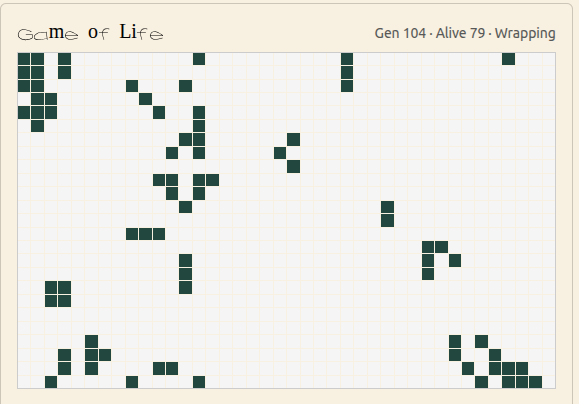
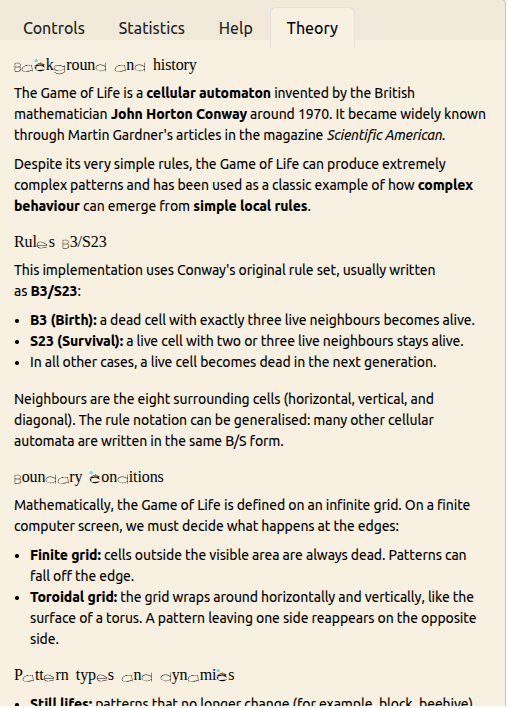
Conway’s Game of Life
A classic cellular automaton where simple rules create complex and often surprising emergent behaviour. Draw your own starting patterns and watch the system evolve over time.
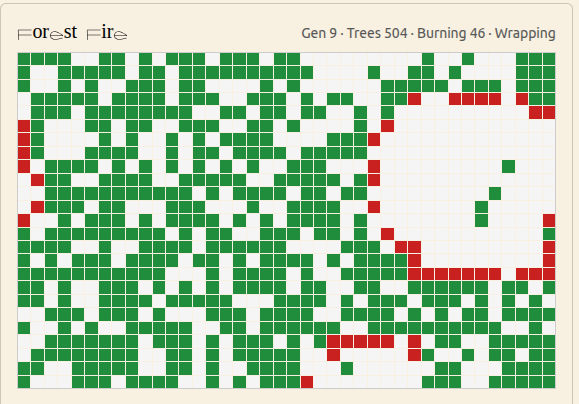
Forest Fire Automaton
A stylised model of wildfire dynamics. Trees grow, lightning strikes, and fire spreads across the grid. Adjust growth and lightning probabilities to explore cycles of growth, destruction, and recovery.
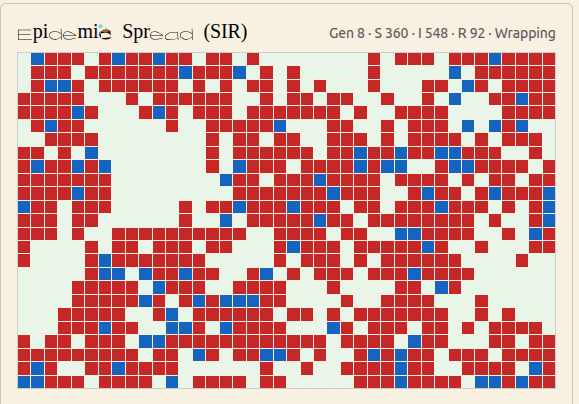
Epidemic Spread (SIR)
A grid-based SIR-style model of infection spread. Each agent can be susceptible, infectious, or recovered. Tune infection probability, recovery time, and immunity to see how outbreaks start, peak, and fade.
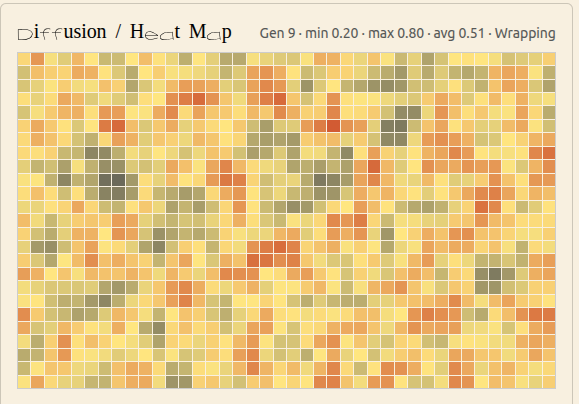
Diffusion / Heat Map
A continuous field model for diffusion. Each cell holds a scalar “heat” value. Create hot spots, adjust diffusion and decay, and watch how the field smooths out or cools down over time.
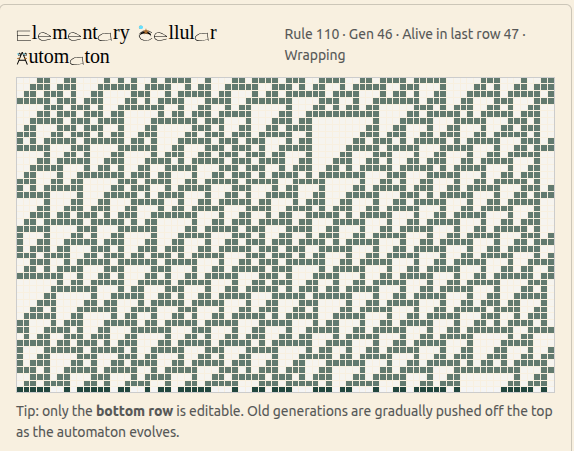
Elementary Cellular Automata
One-dimensional rules such as Rule 30, Rule 90, and Rule 110. Start from a simple initial row and watch how a single line of cells generates rich triangular and fractal patterns over time.
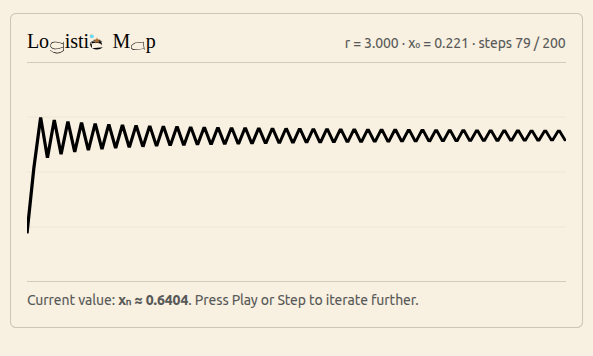
Logistic Map (Growth & Chaos)
The discrete-time population model xn+1 = r·xn(1 – xn). Slide the parameter r to travel from stable equilibrium through period-doubling into chaotic behaviour, and see how a simple formula generates complex dynamics.
Three angles
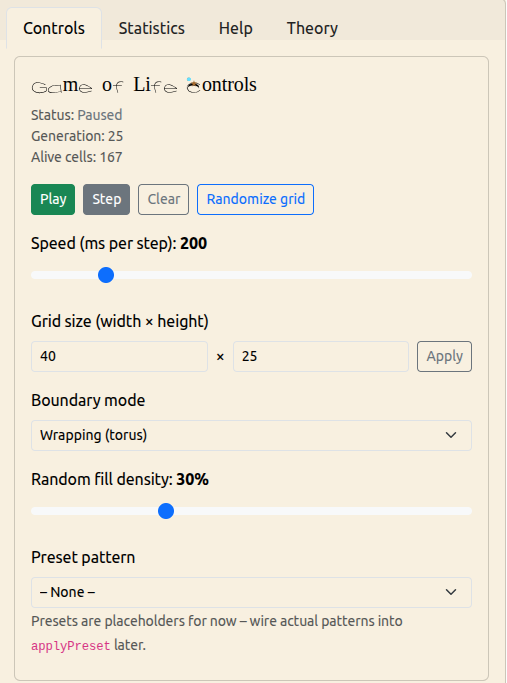
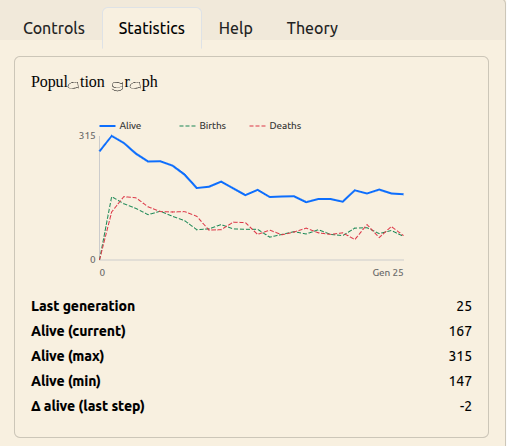
Each simulation can be explored through different lenses — replace these with your “tabs” screenshots.
Not sure where to start?
Spin the wheel and let one game pick you.
- game of life
- burning forest
- epidemic spread
- diffusion
- elementary
- Chaos growth